
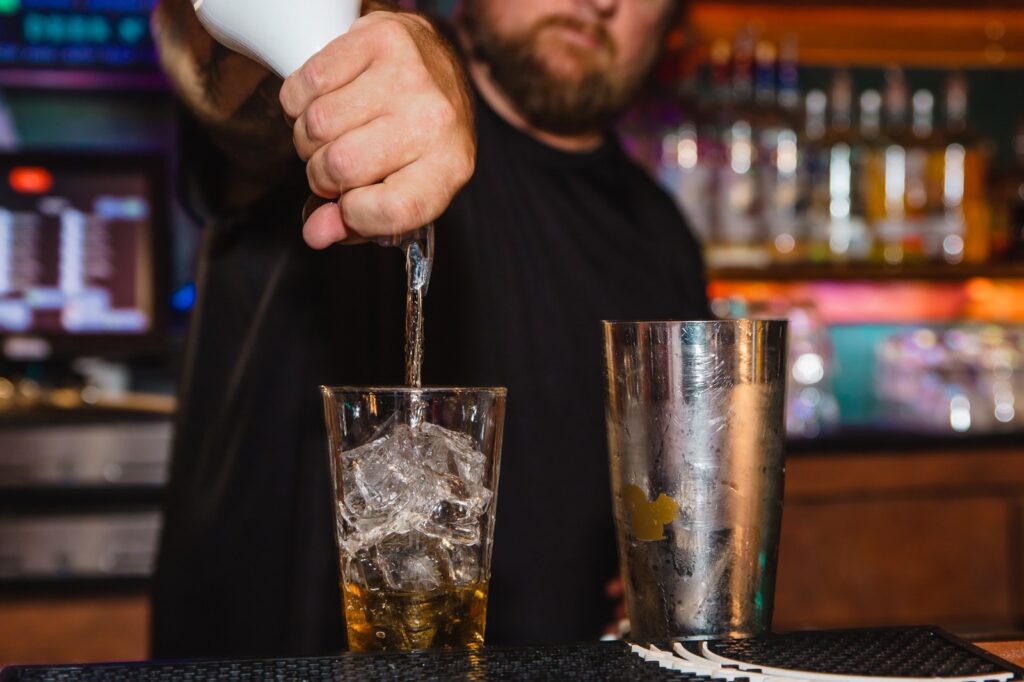
We’ll skip the warm-up. You came here with a question, and we have an answer.
Twenty percent minimum. A tip is part of how bartenders get paid, and under California law it belongs to the employees, never the house. At Silver Fox Lounge, the Pacific Beach dive bar at 1833 Garnet Avenue, twenty percent is the floor, not the ceiling.
That’s the whole article. Everything below is us explaining it slowly, the way a bartender explains last call to the guy who heard it the first time and is hoping for a second opinion.
The Lie at the Bottom of the Receipt
Every bar in America hears the same defense. “I tipped fifteen. That’s standard.” Said with a straight face, as if it were carved over a courthouse door.
Fifteen percent is the number a lot of people learned from their parents, and it stuck around the way plenty of habits do, long after anyone checked whether it still made sense. It doesn’t.
We’ve been pouring drinks since 1975. Pacific Beach has changed around us more times than anyone can count. The math on tipping changed with it. The excuses didn’t.
Who You’re Actually Tipping
Think about what you’re paying for. Not the beer. The beer has a price next to it on the menu.
You’re paying for the person who saw you come down the stairs and had a pretty good idea what you wanted before you said it. Who remembered how you take your Irish coffee. Who kept the guy next to you from becoming your problem. Who laughed at your joke, which was the third time they’d heard it that night and the first time it was funny.
At the Fox, that person is working a room below street level with three pool tables, an electronic dartboard, a pinball machine, eight TVs and a jukebox, every one of which produces questions, requests and arguments at the same time. They are opening a Rolling Rock with one hand and settling who has the next game of pool with the other.
Bartending is part chemistry, part therapy, part security, part stand-up. Our love letter to the people who do it covered all of that in detail. The short version: a good bartender does four jobs at once, and only one of them is on the menu. The tip is how you pay for the three jobs that aren’t on the menu.
The California Part (Read This Before You Argue)
Somebody always brings it up. “California bartenders get minimum wage. Tipping matters less here.”
Two things. First, in California the house can’t touch your tip. Labor Code Section 351 says a gratuity is the sole property of the employee or employees it was left for, and the state’s own Labor Commissioner puts it plainly: tips belong to the employee, not the employer. Employers can’t count tips toward minimum wage, either. When you tip at the Fox, you’re tipping the people behind the bar.
Second, take a walk around Pacific Beach and look at what rent costs within a few blocks of the ocean. Living near the beach isn’t cheap for anybody. Tip like you’ve seen the rents.
What Twenty Percent Actually Means
Twenty percent isn’t generous. It’s the price of admission. Generous starts after that.
On most rounds, the difference between fifteen and twenty percent is a couple of dollars. A couple of dollars is the gap between the customer a bartender is glad to see come down the stairs and the one they quietly hope picked a different bar tonight.
A few rules of the math:
- Tip on the real price. We run the longest happy hour on Garnet: 6 a.m. to 7 p.m. on weekdays and 6 a.m. to 3 p.m. on weekends. Happy hour is a break on your drink. It is not a break on the bartender, who is working exactly as hard at 6:55 p.m. as at 7:05. Tip on what the drinks normally cost.
- Complicated drinks cost more effort. A Rolling Rock takes three seconds to open. A Kentucky Coffee gets built by hand, sometimes before the sun is up. Tip like you know the difference.
- Big rounds, big tip. If you ordered for six people in one trip, you saved yourself five trips. The bartender didn’t save anything.
- If you’re running a tab, make sure the math at the end lands at twenty or above, and do it before the fourth round makes math optional.
What a Great Tipper Looks Like
We’ve watched a lot of tippers. The great ones have a few things in common.
They tip on the first round, not just the last one. They tip the same on a quiet Tuesday morning as on a packed Saturday night. They don’t announce it, and they don’t slide a bill across the bar like they’re bribing a customs agent. They learn the bartender’s name and use it. They say thank you like they mean it, because they do.
And the best tipper doesn’t have to be rich. The person who comes in for one Rock & Shot on a Monday and leaves a few dollars on it every single time, for years, is a better tipper than the guy who drops a big bill once and is never seen again. It’s not the size of one tip. It’s the pattern.
None of that is complicated. All of it is noticed. A tip is the only line on the bill that says what you thought of the person who served you.
Six in the Morning Counts Too
The person behind our bar at 6 a.m. got up before you did. They unlocked a door below street level, got the coffee going, and were ready when the first customer of the day came down the stairs to collect the 6:00 AM CLUB bracelet.
Whatever you’re drinking at that hour, plain coffee or something with Baileys in it, somebody made it for you while most of Pacific Beach was still asleep. Holidays included. We’re open 365 days a year, which means somebody is behind that bar on the mornings everyone else gets off. Tip like you know that, because now you do.
Twenty Is the Floor
The best bars in the world run on a deal nobody signs. You show up and treat the people behind the bar like people. They remember you, look out for you, and pour your drink when they hear the door. The tip is your half of that deal, paid in cash or on a card. (We take both.)
So check the drink menu, order what you want, and when the check comes, do the math right.
Tip your bartender, you absolute monster.
Hold fast.
Silver Fox Lounge | 1833 Garnet Avenue, Pacific Beach | Open 6 a.m. to 2 a.m., 365 days a year, since 1975.
P.S. If you read this and quietly started recalculating your last tab, that’s fine. Come back down the stairs and make it right. Bartenders don’t hold grudges. They hold memories, which is worse.
